
Impact of burning harvesting on the agroindustrial quality of the sugarcane cultivar ‘Mex 69-290’
Article Sidebar
Main Article Content
Abstract
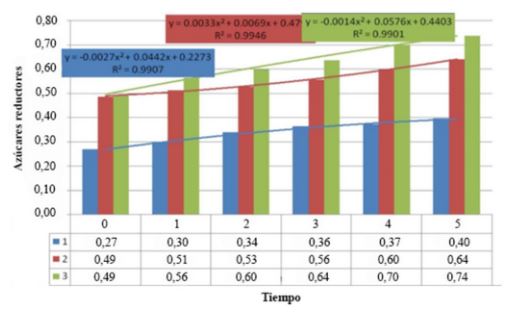
The Mexican state of Veracruz in the 2019-2020 harvest produced 18,413,583 t of sugarcane, with an average of 56,587 t ha-1 and a factory yield of 10.2 %, with a total sucrose produced of 1,876,437 t. At present, 90.063 % of the planted area in all the mills is burned before being cut, affecting the health of the inhabitants of the neighboring towns, the properties of the soil and the quality of the raw material, which is diminished by the time elapsed between cutting and processing in the mills. To determine the deterioration of the main sugarcane variety ‘Mex 69-290’ due to the effect of burning, a randomized block factorial arrangement with three replications was established: I) raw cut cane, II) uncut burned cane, III) whole cut burned cane and days after cutting (0, 1, 2, 2, 3, 4 and 5 days). The variables analyzed were: Pol percentage, reducing sugars, cane moisture and °Brix. It is concluded that the deterioration of ‘Mex 69-290’ sugarcane is more visible after 24 h after cutting, with losses in °Brix, Pol, humidity and increase in reducing sugars. The whole cut burnt cane presented the greatest deterioration, followed by the uncut burnt cane, and the raw cut cane presented the least deterioration.
Downloads
Article Details

This work is licensed under a Creative Commons Attribution-NonCommercial 4.0 International License.
Those authors who have publications with this journal accept the following terms of the License Attribution-NonCommercial-ShareAlike 4.0 International (CC BY-NC-SA 4.0):
You are free to:
- Share — copy and redistribute the material in any medium or format
- Adapt — remix, transform, and build upon the material
- The licensor cannot revoke these freedoms as long as you follow the license terms.
Under the following terms:
- Attribution — You must give appropriate credit , provide a link to the license, and indicate if changes were made . You may do so in any reasonable manner, but not in any way that suggests the licensor endorses you or your use.
- NonCommercial — You may not use the material for commercial purposes .
- ShareAlike — If you remix, transform, or build upon the material, you must distribute your contributions under the same license as the original.
- No additional restrictions — You may not apply legal terms or technological measures that legally restrict others from doing anything the license permits.
How to Cite
References
BHATIA, S., UPPAL, S. K., THIND, K. S., et al. 2009. Post harvest quality deterioration in sugarcane under different environmental conditions. Sugar Tech, 11 (2): 154-160.
CARDOSO, T. F., WATANABE, M. D., SOUZA, A., et al. 2018. Economic, environmental, and social impacts of different sugarcane production systems. Biofuels, Bioproducts and Biorefining, 12 (1): 68-82.
CONADESUCA. 2020. 6° Informe estadístico del sector agroindustrial de la caña de azúcar en México, Zafras 2009-2010/2018-2019. Disponible en: https://www.gob.mx/conadesuca/es/articulos/6-informe-estadistico-del-sector-agroindustrial-de-la-cana-de-azucar-en-mexico?idiom=es. Consultado 07/05/2020.
DE JESUS, K. R. E., TORQUATO, S., MACHADO, P. G., et al. 2019. Sustainability assessment of sugarcane production systems: SustenAgro Decision Support System. Environmental Development, 32: 100444.
LINNENLUECKE, M. K., NUCIFORA, N. and THOMPSON, N. 2018. Implications of climate change for the sugarcane industry. Wiley Interdisciplinary Reviews: Climate Change, 9 (1): e498.
MACHADO, P. G., RAMPAZO, N. A. M., PICOLI, M. C. A., et al. 2017. Analysis of socioeconomic and environmental sensitivity of sugarcane cultivation using a Geographic Information System. Land Use Policy, 69: 64-74.
SANTANA, P. B., ASPIAZU, I., PINHEIRO, D. T., et al. 2019. Industrial characteristics of sugarcane varieties under semi-arid conditions and different irrigation depths. Emirates Journal of Food and Agriculture, 31 (9): 725-734.
SOLOMON, S. 2009. Post-harvest deterioration of sugarcane. Sugar Tech, 11 (2): 109-123.
SOLOMON, S. 2000. Post-harvest cane deterioration and its milling consequences. Sugar Tech, 2 (1): 1-18.
WHITE, P. M. and WEBBER, C. L. 2018. Green-cane harvested sugarcane crop residue decomposition as a function of temperature, soil moisture, and particle size. Sugar Tech, 20 (5): 497-508.